
 By admin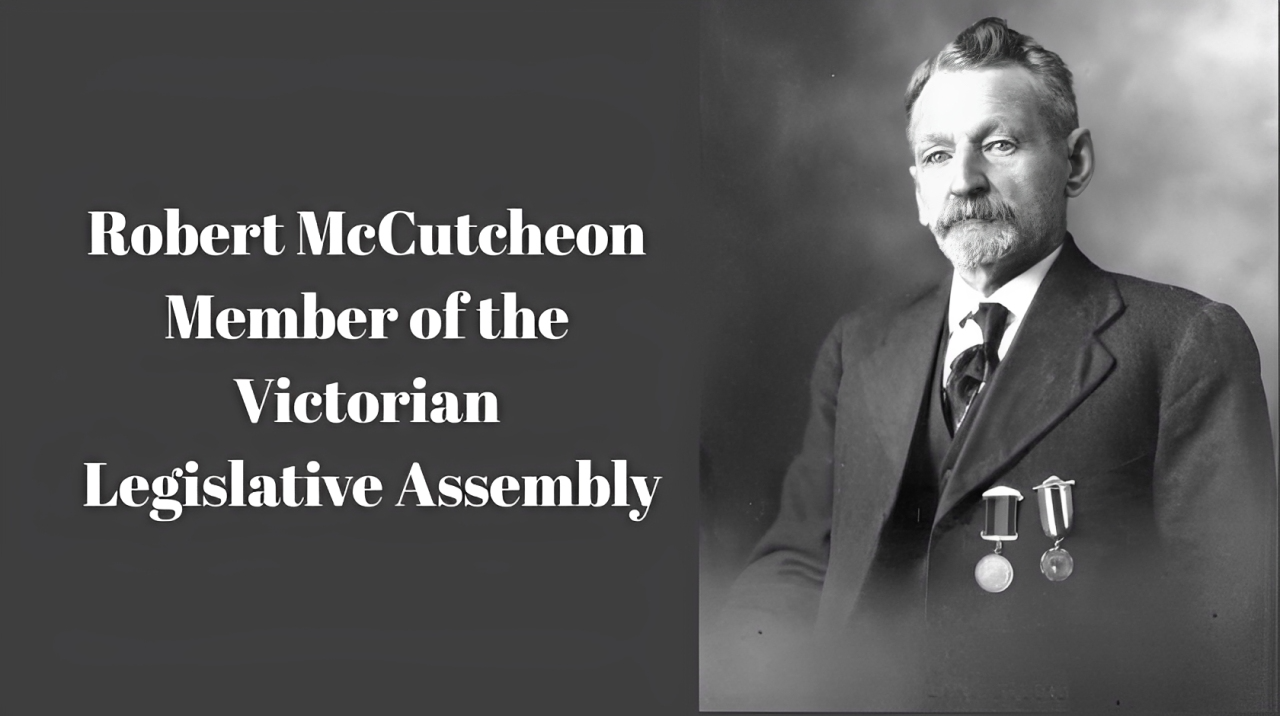
Robert McCutcheon occupies a respected place in the history of the Victorian Legislative Assembly, where he served as the representative for St Kilda from 1902 to 1917. Although he may not be as widely recognized today as some of Australia’s premiers or national political figures, his steady commitment to public service made him an influential participant in Victoria’s early twentieth-century political landscape. His journey from Irish immigrant to successful businessman and parliamentarian reflects the opportunities and challenges that shaped colonial and post-Federation Australia.
McCutcheon’s political career unfolded during a transformative period in Victoria’s history. Australia had recently become a federation in 1901, industries were expanding rapidly, and governments were responding to increasing demands for infrastructure, education, public services, and economic reform. Throughout these years, McCutcheon earned a reputation as a thoughtful legislator who combined practical business experience with an independent political outlook. His willingness to disagree with his own political allies when necessary demonstrated a commitment to principle rather than simple party loyalty. Today, historians continue to regard him as one of the dependable parliamentary figures who helped shape Victoria during an important era of development.
Introduction to Robert McCutcheon
Robert George McCutcheon was born in 1841 in Omagh, County Tyrone, Ireland. Like many Irish families during the nineteenth century, his family eventually emigrated to the colony of Victoria, seeking improved economic opportunities. This migration proved to be a defining moment, opening the door to a successful career in journalism, printing, business, and eventually politics.
His public career reflected determination and adaptability. Before becoming a parliamentarian, McCutcheon built a strong reputation within Melbourne’s printing industry, an occupation that required both technical expertise and business management skills. These experiences later influenced his approach to public administration, giving him a practical understanding of commerce, communication, and civic responsibility. Rather than entering politics as a career politician, he brought real-world experience that resonated with many constituents in St Kilda.
Why He Is Remembered Today
Robert McCutcheon is remembered primarily because of his long parliamentary service and his role during a significant period in Victoria’s political evolution. His years in office coincided with Australia’s early federation era, when governments faced questions about state responsibilities, economic development, and modern public administration.
Unlike many politicians whose careers were defined by dramatic controversies, McCutcheon’s legacy rests upon consistency and responsible governance. He participated actively in parliamentary committees, contributed to legislative debates, and accepted ministerial responsibilities while maintaining an independent political identity. His career demonstrates that lasting political influence often comes through reliable service rather than headline-grabbing speeches.
His Place in Victorian Political History
Serving continuously for fifteen years was a notable achievement during an era of changing political alliances. Representing St Kilda from 1902 until his retirement in 1917, McCutcheon witnessed significant social and economic transformation across Victoria.
Modern parliamentary records continue to recognize his contribution through official historical archives maintained by the Parliament of Victoria, ensuring researchers and historians can study his legislative work and committee service.
Early Life and Family Background
McCutcheon’s early years in Ireland were shaped by the conditions affecting many families during the mid-nineteenth century. After emigrating to Victoria around 1858, he entered a rapidly growing colony fueled by immigration and economic expansion following the gold rushes. Melbourne was becoming one of the British Empire’s fastest-growing cities, creating opportunities for ambitious young newcomers.
Rather than immediately entering politics, McCutcheon focused on developing professional skills. He even spent approximately one year working as a printer in Calcutta, gaining valuable international experience before returning to Australia. Upon his return, he worked as a journalist in Ballarat and Port Fairy, occupations that strengthened his communication skills and broadened his understanding of public affairs.
On 13 December 1867, he married Mary Ebblewhite, and together they raised eight children. Mary later became active in the Australian Women’s National League, illustrating the family’s engagement with public life beyond Robert’s parliamentary career. Their household reflected the civic-minded values that characterized many influential Victorian families during the era.
Birth in Ireland
Being born in County Tyrone connected McCutcheon to one of the many immigrant communities that helped build colonial Australia. Irish migrants contributed significantly to Victoria’s economic, political, and cultural development, and McCutcheon’s story represents one example of successful integration into Australian public life.
Migration to Victoria
The family’s move to Victoria transformed McCutcheon’s future. Access to expanding industries and educational opportunities enabled him to establish himself professionally before entering politics decades later.
Career Before Politics
Long before becoming a legislator, Robert McCutcheon established an impressive business career. After journalism, he joined the Melbourne printing firm Mason Firth & McCutcheon, eventually becoming its sole owner in 1878. Managing a successful printing company demanded financial discipline, organizational leadership, and attention to detail—all qualities that later benefited his parliamentary career.
Printing businesses occupied an important place in nineteenth-century society because newspapers, government publications, books, and commercial materials depended upon them. McCutcheon’s familiarity with publishing also kept him closely connected to political developments and public opinion. This background distinguished him from many contemporaries whose experience lay primarily in law or farming.
His reputation as both businessman and community leader eventually encouraged supporters to nominate him for political office. By the time he entered parliament, he possessed decades of practical management experience and understood the concerns of employers, workers, and urban residents alike.
Printer and Journalist
Working in journalism taught McCutcheon the importance of accurate information and informed public discussion. His later parliamentary speeches reflected these habits of careful observation and measured judgment.
Business Success in Melbourne
Owning a respected printing company strengthened his standing within Melbourne’s commercial community, giving him credibility among voters who valued business experience.
Entry into the Victorian Legislative Assembly
Robert McCutcheon entered the Victorian Legislative Assembly after winning the St Kilda electorate in 1902. His election occurred during an exciting period, as Australia had recently become a federation and state governments were adapting to changing constitutional responsibilities.
Although generally associated with the Liberal or Ministerialist movement, McCutcheon demonstrated political independence throughout his career. One notable example occurred in 1908, when he opposed the government led by Thomas Bent, despite belonging to broadly similar political circles. His willingness to challenge leadership reflected careful evaluation of policy rather than unquestioning party loyalty.
St Kilda itself was a vibrant Melbourne suburb experiencing considerable growth, making it an important electorate with diverse economic and social interests. Representing such a constituency required balancing commercial priorities, urban development, and public services while responding to the evolving needs of residents. McCutcheon maintained voter confidence for fifteen consecutive years, suggesting strong local support for his representation.
Election for St Kilda
McCutcheon succeeded William Williams and later passed the seat to Agar Wynne following his retirement in 1917. His lengthy tenure provided continuity during years of political change.
Political Beliefs and Liberal Ideals
His political philosophy emphasized responsible government, fiscal discipline, and practical administration. Even when disagreements emerged, he generally pursued moderate, pragmatic solutions.
Parliamentary Contributions
During his years in parliament, McCutcheon accepted appointment as Minister without Portfolio between 1915 and 1916. While this ministry lacked responsibility for a specific department, it nevertheless reflected the government’s confidence in his judgment and parliamentary experience.
His committee work was equally significant. Parliamentary records show service on the Public Accounts Committee, Printing Committee, Elections and Qualifications Committee, and several special committees. These assignments required detailed examination of legislation, government expenditure, electoral procedures, and administrative matters. Committee work often receives less public attention than parliamentary debates, yet it forms an essential part of effective democratic governance because legislation is frequently refined through committee review.
McCutcheon’s legislative career concluded in 1917, when he chose retirement after fifteen years representing St Kilda. The following year, on 20 October 1918, he died in St Kilda, Victoria, closing a public career that had spanned journalism, business leadership, and parliamentary service.
Minister Without Portfolio
Serving in the ministry recognized McCutcheon’s experience and reliability, even though he resigned from the position in 1916 after approximately one year.
Committee Work and Legislative Service
Committee appointments demonstrated the trust placed in McCutcheon by parliamentary colleagues. His work contributed to legislative oversight and improved administrative accountability throughout his years in office.
Challenges and Political Legacy
Every political career involves difficult decisions, and Robert McCutcheon’s was no exception. His opposition to Premier Thomas Bent illustrated his willingness to place personal conviction above political convenience. Such independence sometimes created tension but also strengthened his reputation for integrity.
Although McCutcheon never became one of Victoria’s most famous political leaders, historians recognize that democratic institutions depend not only upon prominent premiers but also upon diligent legislators who carefully examine legislation, represent constituents responsibly, and contribute to stable government. His career exemplifies this quieter yet equally important form of political leadership.
Personal Life and Community Involvement
Away from parliament, McCutcheon maintained close ties to family and community. Together with his wife Mary, he participated in Melbourne’s civic life, while their children grew up during an era of rapid urban and national development. His background in publishing and journalism continued influencing his interest in public affairs throughout his life.
His professional success also reflected broader opportunities available to skilled immigrants in colonial Victoria. Through determination and enterprise, he established both commercial success and public respect before entering political office.
Robert McCutcheon’s Lasting Legacy
More than a century after his parliamentary career ended, Robert McCutcheon remains part of Victoria’s documented political history. Official parliamentary archives preserve records of his speeches, committee memberships, ministerial appointment, and electoral service, allowing scholars to examine his contribution in detail. His life illustrates how immigrants helped shape Australia’s democratic institutions while contributing to business, journalism, and public administration.
Although public memory often focuses on political leaders with dramatic careers, figures like McCutcheon remind us that democracy depends equally upon dedicated representatives who perform their responsibilities conscientiously over many years. His steady service between 1902 and 1917 remains an enduring example of commitment to representative government.
Conclusion
Robert George McCutcheon built an impressive career that combined journalism, entrepreneurship, and public service. From his beginnings in Ireland to his years representing St Kilda in the Victorian Legislative Assembly, he consistently demonstrated practical leadership and independent judgment. His contributions through parliamentary committees, ministerial service, and responsible representation helped strengthen Victoria’s political institutions during an important chapter of Australian history.
While he may not be among Australia’s most widely known politicians today, his legacy continues through official parliamentary records and historical research that recognize his dedication to the people of Victoria.
Frequently Asked Questions
1. Who was Robert McCutcheon?
Robert George McCutcheon was an Irish-born Australian politician, printer, and journalist who served as the Member for St Kilda in the Victorian Legislative Assembly from 1902 to 1917.
2. Which electorate did Robert McCutcheon represent?
He represented St Kilda in the Victorian Legislative Assembly for fifteen years.
3. Did Robert McCutcheon hold a ministerial position?
Yes. He served as Minister without Portfolio from 1915 until his resignation in 1916.
4. What profession did Robert McCutcheon have before entering politics?
Before politics, he worked as a journalist, printer, and owner of the Melbourne printing firm Mason Firth & McCutcheon.
5. When did Robert McCutcheon die?
He died on 20 October 1918 in St Kilda, Victoria, one year after retiring from parliament.